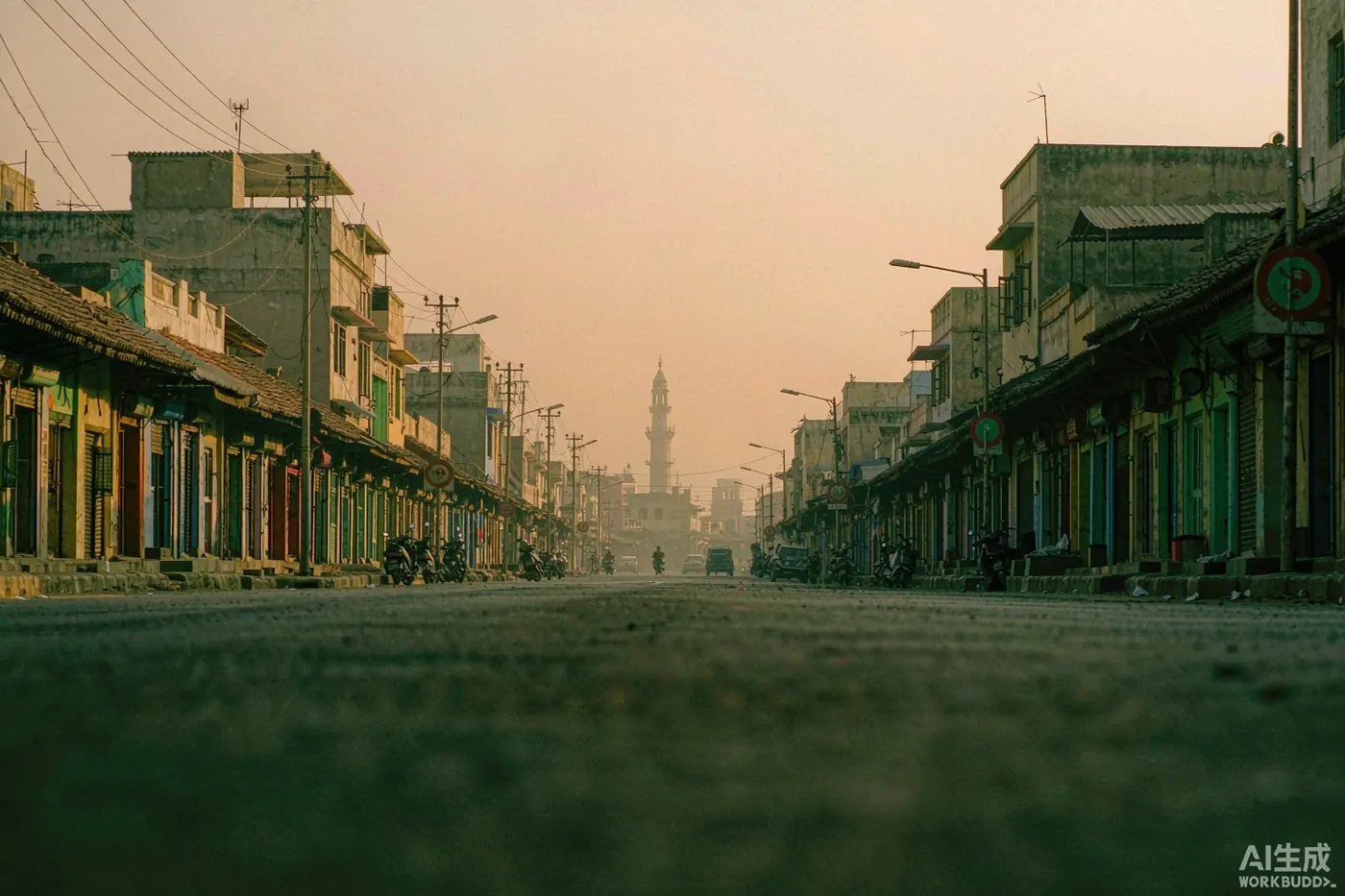
Burewala (Punjabi: بورے والہ) is a city in Vehari District, Punjab, Pakistan. It is the headquarters of Burewala Tehsil, an administrative subdivision of the district, and the district's largest city — larger than the district capital, Vehari, which is the seat of government.
For anyone trying to place it: Burewala sits in the middle of Pakistan's canal country. It is not a historic Mughal city, not a river port, and not a hill station. It is a market town that grew because irrigation made the surrounding land productive — and that single fact explains almost everything about it.
Where exactly is Burewala?
The city lies at approximately 30.16°N, 72.68°E, on the Delhi–Multan Road. That road position matters: it puts Burewala on a long-established north–south corridor through Punjab, between the Pakistani heartland cities to the north and the southern Punjab belt around Multan.
The Sutlej River crosses the area near the towns of Kachi Pakki, Jamlera and Sahuka. Vehari District as a whole lies along the river's right bank, which forms the district's southern boundary.
| Fact | Detail |
|---|
| Province | Punjab, Pakistan |
| District | Vehari District |
| Administrative status | Tehsil headquarters |
| Coordinates | 30.16°N, 72.68°E |
| Main highway | Delhi–Multan Road |
| Nearest river | Sutlej (right bank) |
| National size rank | 27th largest city in Pakistan |
Population and languages
Burewala's residents are overwhelmingly Punjabi-speaking. According to the 2023 census of Pakistan, 94.03% of people in Burewala city reported Punjabi as their first language. Urdu was the second most common first language at 5.30%, with a further 0.66% speaking other Pakistani languages — mostly Sindhi and Pashto.
That 94% figure has a practical consequence for English-speaking visitors: outside schools, government offices and the larger businesses, day-to-day conversation is in Punjabi. Urdu serves as the common second language and is understood almost everywhere.
The wider district, for context
Because so much published data is district-level rather than city-level, it helps to hold both sets of numbers.
| Vehari District indicator | Figure | Source |
|---|
| Population | 3,430,421 | Census 2023 |
| Households | 543,036 | Census 2023 |
| Area | 4,364 km² | District profile |
| Urban population share | 22.82% | Census 2023 |
| Literacy rate | 59.10% | Census 2023 |
| — male | 66.43% | Census 2023 |
| — female | 51.57% | Census 2023 |
| Sex ratio | 102.33 males per 100 females | Census 2023 |
| Under 10 years old | 27.44% | Census 2023 |
| Punjabi first language | 74.10% | Census 2023 |
| Saraiki first language | 19.12% | Census 2023 |
| Urdu first language | 5.83% | Census 2023 |
Note the difference between city and district language shares. Burewala city is 94% Punjabi; the district as a whole is 74% Punjabi with a substantial 19% Saraiki-speaking population, concentrated in the western parts of the district nearer the Saraiki belt.
The economy: canals, cotton and maize
Burewala's economy is agricultural, and it is agricultural because of irrigation. Before the Pakpattan Canal was put into operation, the area was jungle. Once canal water arrived, land was cleared, villages were established, and cultivation expanded across what had been uncultivated ground.
The scale of that expansion is still visible in the district's farm data. Maize acreage across Vehari District went from 141,000 acres in 2015–16 to 309,000 acres in 2019–20, while production rose from 428,000 tonnes to about 1.1 million tonnes over the same four years.
Why it matters to business
A district growing over a million tonnes of maize a year, spanning 4,364 km² with 3.43 million people, is a substantial agricultural market. Inputs, machinery, storage, transport and processing all have a natural customer base here. See the full analysis of Vehari's agricultural economy.
Cotton is the other crop historically associated with this belt of Punjab, alongside wheat and other staples. The canal system — Pakpattan Canal and the broader link canals — remains the foundation of the local economy.
Education in Burewala
The city has a fuller education sector than its size would suggest, with a government degree college and campuses of five separate universities and institutes.
| Institution | Type |
|---|
| Government Degree College Burewala | Degree college |
| University of Agriculture, Faisalabad — Burewala Campus | University campus |
| Barani Institute of Sciences — Burewala Campus | Institute campus |
| Punjab College of Science — Burewala Campus | College campus |
| Superior University Lahore — Burewala Campus | University campus |
| Government M.C Model High School | Government school |
| Government B.T.M High School | Government school |
| Tehzeeb-ul-Itfal Model School | Private school |
Notably, Government College, Burewala is where Waqar Younis studied arts and economics before his cricket career took him to the national team — an unusual detail for an international fast bowler. See the full Waqar Younis career record.
What to see: the shrine at Dewan Sahib
Burewala's most significant heritage site is not in the city itself. The shrine of Hazrat Baba Haji Sher Dewan honours Haji Sher Muhammad Dewan, a preacher of Islam in the Punjab born in 651 AD. It stands in a village historically called Kothewal, about 18 km from Burewala.
For orientation, the shrine is roughly 125 km from Multan and 73 km from Pakpattan. It is the anchor of the area's religious calendar and the strongest single reason to treat Burewala as a destination rather than a waypoint.
Other points of interest
- Sukh Bias — remains of an old water canal in the northern part of Burewala Tehsil, a physical trace of the pre-modern irrigation system.
- The P.I. Link canal — which now incorporates the historic well that gave the city its name.
- Central market areas — the commercial core serving Burewala Tehsil and its surrounding villages.
How the city got its name
The exact origin is unknown, but the most commonly cited account involves a well. One theory holds that the city is named after a man called "Burha", described in local accounts as a Sikh, with the village also known as "Old Bura" or "Purana Boora".
The people of that village constructed a well with a diameter of 8 feet and named it after their ancestor. It became known as "Chah Boorhay wala" — the Well of Burha. That well is now incorporated into the P.I. Link canal, and from it came the name of the new city: Burewala.
Understanding the surrounding area
Burewala Tehsil is one of four tehsils in Vehari District. The district was created on 1 July 1976, carved out of four tehsils of Multan District: Vehari, Burewala, Jallah Jeem and Mailsi. In the same month, Burewala was upgraded to a subdivision, with the areas of Gaggo Mandi, Shaikh Fazal, Sahuka, Jamlera and Chak No. 327/E.B included.
| Town / tehsil | Status in the district |
|---|
| Burewala | Largest city in the district; tehsil headquarters |
| Vehari | District capital |
| Jallah Jeem | Third largest city |
| Mailsi | Tehsil of the district |
Vehari District borders Bahawalnagar and Bahawalpur to the south, Pakpattan to the east, Khanewal and Lodhran to the west, and Sahiwal and Khanewal to the north. The district is roughly 93 km long and 47 km wide, sloping gently from northeast to southwest.
Notable people from Burewala
For a mid-sized agricultural city, the list is unusually deep.
| Name | Field | Known for |
|---|
| Waqar Younis | Cricket | 373 Test / 416 ODI wickets; the "Burewala Express" |
| Mohammad Irfan | Cricket | Tallest player in international cricket history, 2.16 m |
| Gulraiz Sadaf | Cricket | Multan first-class side |
| Major Tufail Mohammad | Military | Nishan-e-Haider, 3rd recipient |
| Rajesh Khanna | Film | Ancestral village |
Practical notes for visitors
Burewala is best reached by road on the Delhi–Multan Road. The nearest major city for international connections and onward travel is Multan, which has the region's principal airport. For travellers heading to the shrine at Dewan Sahib, allow for roughly 18 km from the city.
Because the city is Punjabi-speaking and English-language infrastructure is limited, it helps to arrange local contacts in advance or work through Urdu. Basic services — markets, banks, hospitals and schools — are concentrated in the city centre, which serves the whole tehsil.
Summary
Burewala is the largest city in Vehari District and the 27th largest in Pakistan, sitting on the Delhi–Multan Road in central Punjab. It is 94% Punjabi-speaking, built on canal irrigation, and economically dependent on maize and cotton. It has eight notable educational institutions, one major Sufi shrine 18 km away, and a record of producing international cricketers far out of proportion to its size.
For most of the English-speaking world, none of this is written down anywhere in one place. That is the gap this guide exists to fill.
Sources: 2023 Census of Pakistan; Burewala city profile; Vehari District profile. Retrieved October 2026. Statistics are marked as city-level or district-level where they differ.