Burewala did not grow around an old fort or a river port. It grew because a canal was dug through jungle, and because a Sufi saint was buried nearby thirteen centuries ago.
The land that Burewala now occupies was, before settlement, covered with jungle. It was later inhabited by the Dhuddi tribe of Rajputs. The settlement that followed was not organic — it was the direct product of irrigation engineering.
With the operation of the Pakpattan Canal — an irrigation canal in central Punjab extracted from the Sulemanki Headworks and named after the city of Pakpattan — agriculture began to flourish. Villages were established and jungle was cleared for cultivation. Because the area fell within the Eastern Canal Division, it was administratively designated as village no. 118/EB, where "EB" stood for Eastern Barr.
Still visible today
In the northern part of Burewala Tehsil, remains of an old water canal survive — now known as Sukh Bias. It is a physical trace of the irrigation system that preceded the modern canal network.
The exact origin is unknown, but the most commonly cited account involves a well.
One theory holds that the city is named after a man called "Burha" — described in local accounts as a Sikh. The village was also known as "Old Bura" or "Purana Boora".
The people of that village constructed a well with a diameter of 8 feet, naming it after their ancestor. It became known as "Chah Boorhay wala" — the Well of Burha. That well is now incorporated into the P.I. Link canal. From the well came the name of the new city: Burewala.
| Element | Detail |
|---|---|
| Namesake | "Burha" |
| Old village name | Old Bura / Purana Boora |
| The well | Chah Boorhay wala |
| Well diameter | 8 ft |
| Well today | Part of the P.I. Link canal |
Birth of Haji Sher Muhammad Dewan, the Sufi preacher of Islam in the Punjab whose shrine now draws pilgrims to Dewan Sahib, near Burewala.
The area is jungle, later inhabited by the Dhuddi tribe of Rajputs.
Operation of the Pakpattan Canal transforms the area. Villages are established, jungle cleared, and the settlement designated village no. 118/EB of the Eastern Canal Division.
Vehari District is created out of four tehsils of Multan District — Vehari, Burewala, Jallah Jeem and Mailsi.
Burewala is upgraded to a subdivision. The areas of Gaggo Mandi, Shaikh Fazal, Sahuka and Jamlera, and Chak No. 327/E.B are included.
Waqar Younis is born in Burewala — the future "Burewala Express" and Pakistan's youngest Test captain.
Census records Burewala as the 27th largest city in Pakistan, with 94.03% of residents speaking Punjabi.
Geography note
Burewala is situated on the Delhi–Multan Road. The Sutlej River crosses near the towns of Kachi Pakki, Jamlera and Sahuka. Vehari District lies along the river's right bank, which forms the district's southern boundary.
Vehari District's farm economy is built on canal irrigation and has expanded sharply in recent years — maize in particular.
| Indicator | 2015–16 | 2019–20 | Change |
|---|---|---|---|
| Maize acreage (district) | 141,000 acres | 309,000 acres | +119% |
| Maize production (district) | 428,000 tonnes | ~1,100,000 tonnes | +157% |
Maize acreage in Vehari District more than doubled in four years, from 141,000 acres in 2015–16 to 309,000 acres in 2019–20. Over the same period, total production rose from 428,000 tonnes to close to 1.1 million tonnes.
Alongside maize, the district's canal-fed soils support cotton — the crop historically associated with this belt of Punjab — as well as wheat and other staples. The Pakpattan Canal and the broader link-canal system remain the foundation of the local economy, exactly as they were when the first villages were cleared from the jungle.
For business
A district growing more than a million tonnes of maize a year, with a 4,364 km² land base and a population of 3.43 million, is a real agricultural market. Input supply, machinery, storage and logistics all have a natural customer base in and around Burewala.
Agricultural figures per Vehari District profile, covering the whole district rather than Burewala city alone.
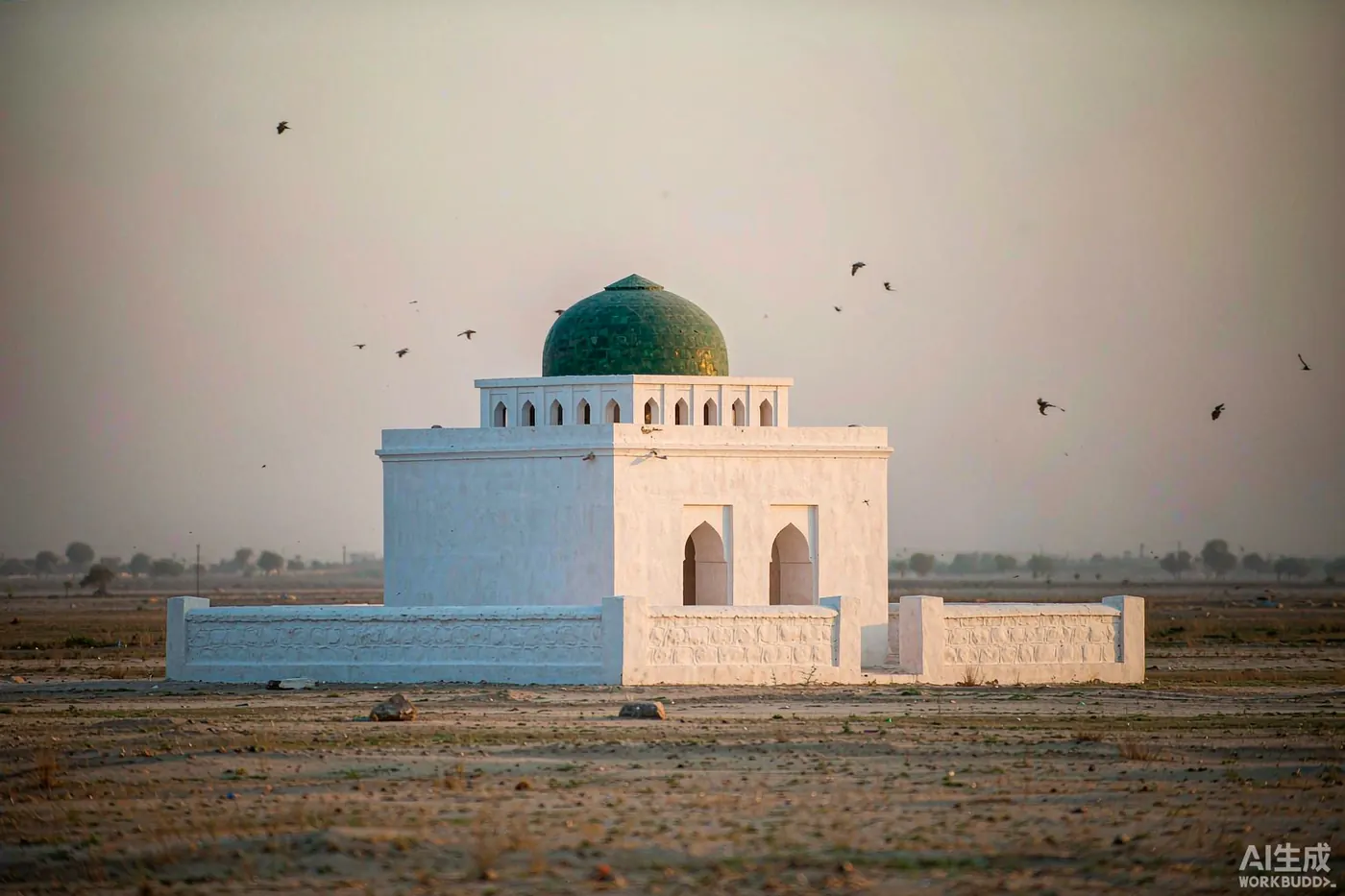
The area's most significant heritage site, and its most under-documented one in English.
The shrine honours Haji Sher Muhammad Dewan, a preacher of Islam in the Punjab area born in 651 AD. It stands in a village historically named Kothewal, near Burewala.
Distances place it clearly within the Burewala orbit: roughly 125 km from Multan and 73 km from Pakpattan, and about 18 km from Burewala city. The site is associated with the Chawli Mashaikh, and is the anchor of the area's religious calendar.
For visitors and researchers, it is the single strongest reason to treat Burewala as a destination rather than a waypoint on the Delhi–Multan Road.
| Namesake | Haji Sher Muhammad Dewan |
|---|---|
| Born | 651 AD |
| Village | Kothewal (historic name) |
| Distance, Burewala | ~18 km |
| Distance, Multan | 125 km |
| Distance, Pakpattan | 73 km |